

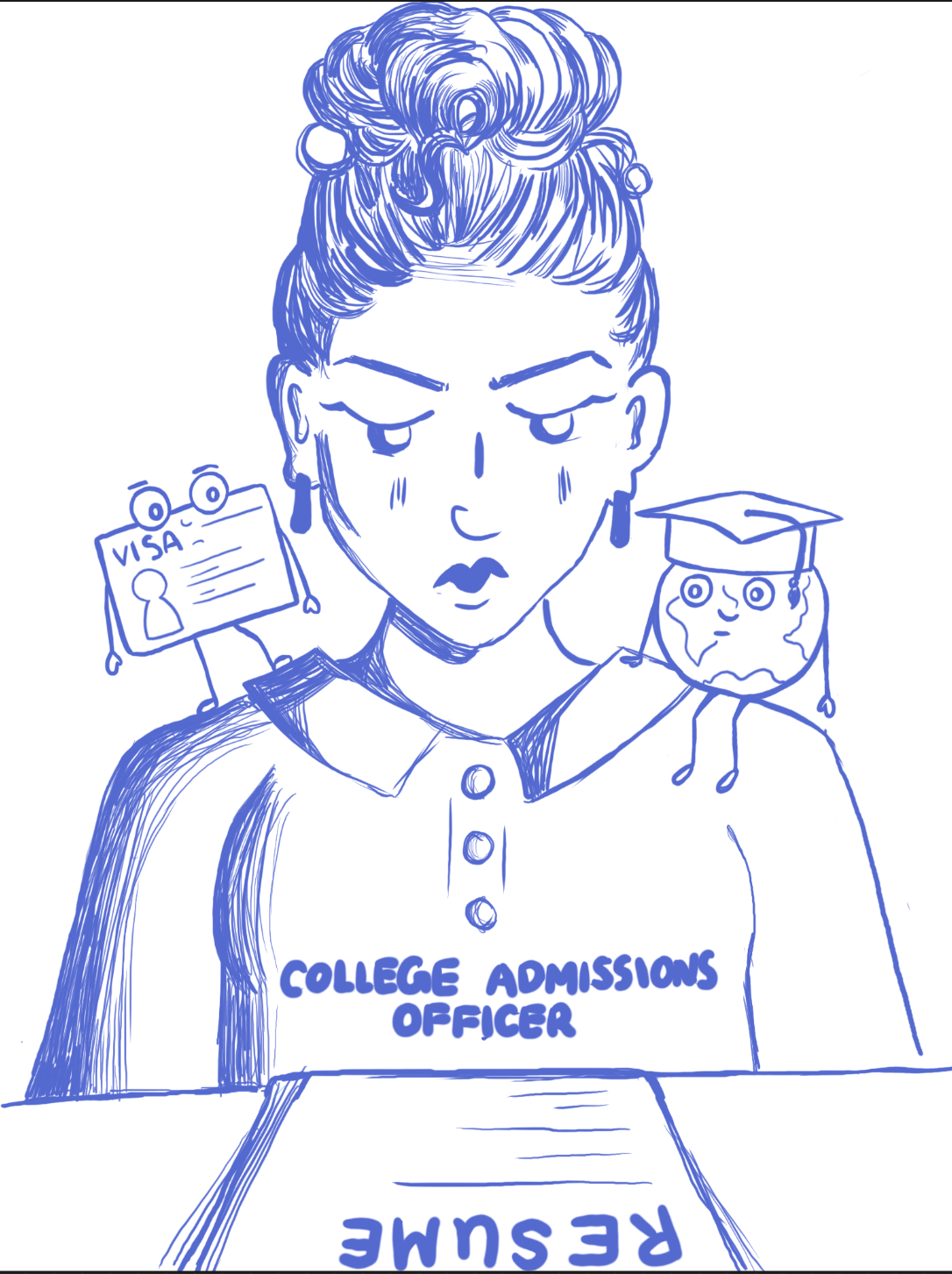
The Trump administration’s tighter visa rules have raised questions about their impact on U.S. colleges’ international enrollment. Increased federal scrutiny and new restrictions have already contributed to declining applicant numbers. Public threats on social media targeting international students have only intensified these fears.
Assistant Director of College Counseling, Elena Wong believes that these judicial and legislative decisions will have only a modest impact on application outcomes. “Do I suspect some schools will bring in a larger class in early decision? Sure. I think waitlists will probably grow,” she said. Wong believes that waitlists will grow as colleges seek more flexibility amid increasingly unpredictable yield rates. Still, she expects overall application patterns to remain relatively stable. She noted that interest in highly selective colleges is unlikely to change, since the highly competitive schools Menlo students typically target will continue to attract large applicant pools.
Wong speculated that the next few application cycles could look different, predicting that colleges will experiment with new strategies to protect their yield, while still attracting the students they want to enroll. “Colleges are businesses and so they want to protect themselves foremost,” Wong said. Senior Ananya Goel wasn’t surprised by this trend in the decline of international student enrollment. She views the policy changes as a continuation of the administration’s beliefs of prioritizing America, which has involved a long period of tightened policy on immigration pathways and clampdowns on nonresidents. “I think a large part of college and the experience of college is to learn from a diverse range of perspectives. […] And I think when you get rid of that international perspective from people of different socio-economic and racial backgrounds […] it limits a lot of the learning and kind of opportunities you can have to kind of grow as a person,” Goel said. Junior Celina Chen also expressed concern about the broader national implications of the policy changes. “The people coming to the U.S. on visas for college or grad school are the best and brightest from other countries. […] I think a lot of them would choose to stay in America, contributing to our science, tech and economy,” Chen said. She worries that limiting these pathways will have long-term consequences for the country’s talent pipeline and innovation.
Wong also emphasized that colleges are still interested in attracting global applicants. “I think it’s important to note that colleges are still actively recruiting international students because they bring a different perspective,” Wong said.
Goel believes that reduced international enrollment could also affect domestic applicants. “I think by reducing the number of international slots that they have, it will help us, or they might end up keeping that same number of slots. I think it depends on future decisions,” Goel said.
Chen also expects acceptance rates to rise for domestic college applicants this year. “The international students who come to America tend to be very qualified candidates and they tend to make up like 15%-20% of the undergrad student body at a lot of top schools,” Chen said. She highlights how competitive the international applicant pool typically is.