

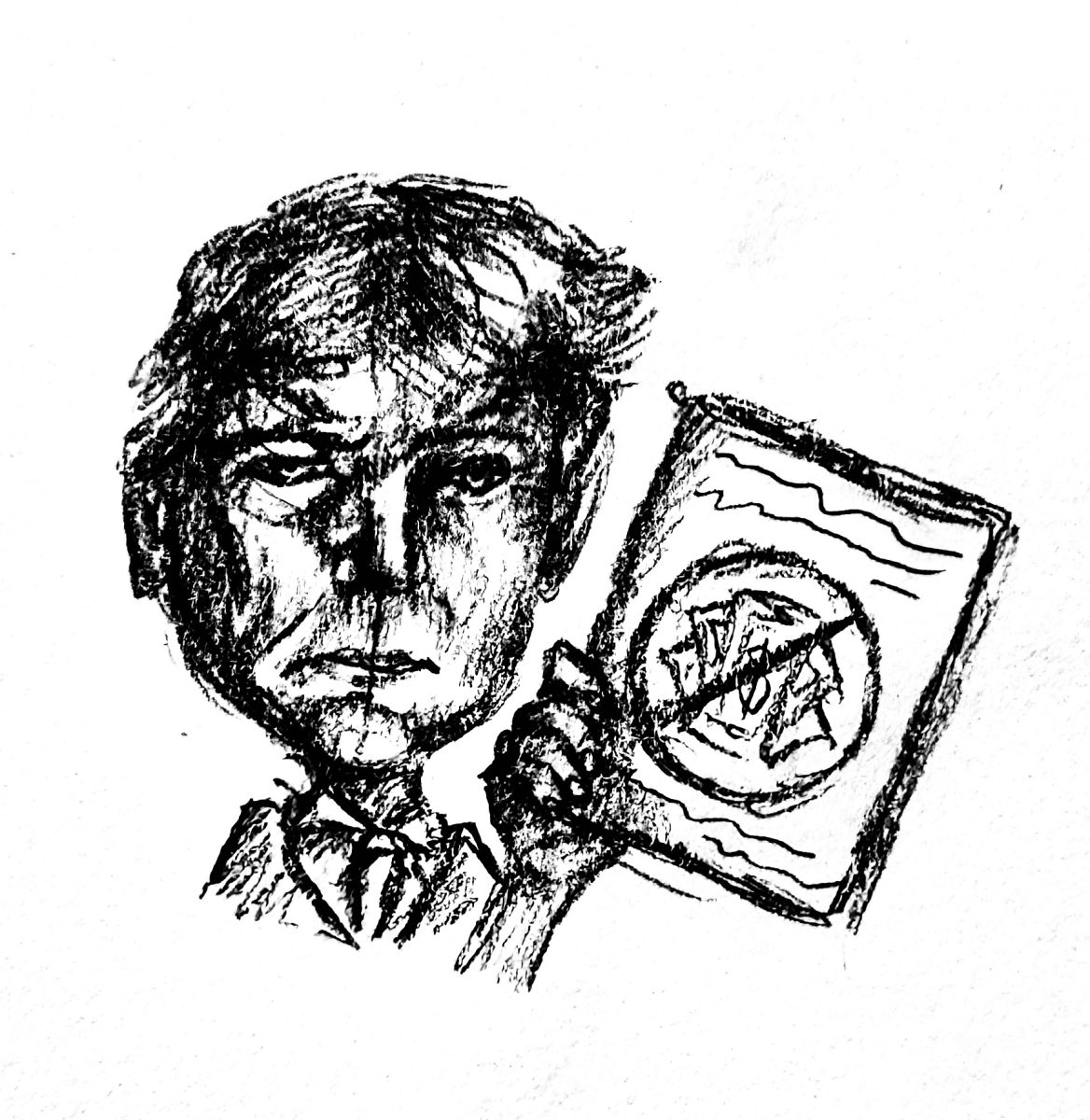
The longest government shutdown in the history of the United States finally ended recently after lasting 43 days, a period that left 1.4 million federal employees unpaid or furloughed, flights canceled or delayed and political divisions within the country deepened. President Donald Trump signed a new funding bill that reopens the government through early next year, but the repercussions from the shutdown are only beginning to show.
A government shutdown typically happens when Congress fails to pass, or the president refuses to sign, the bills that fund federal agencies. Without that money, departments ranging from park services to the IRS must close or operate with unpaid workers. In this particular shutdown, everything from food aid programs to airport security was affected. At one point, hundreds of flights were delayed or canceled because the TSA workers simply couldn’t afford to keep showing up unpaid.
The shutdown stemmed from arguments over federal spending, and the future of health-insurance subsidies under the Affordable Care Act led to a disagreement between Republicans and Democrats. Republicans, who control the House, pushed for spending cuts and limits on federal programs. Meanwhile, Democrats sought to extend ACA subsidies to help millions of Americans continue to afford healthcare. Without the necessary amount of votes — seven short of the 60-vote threshold — the Republicans were not able to pass the bill, and the shutdown commenced.
However, on Nov. 9, eight Democrats in the Senate broke from the rest of the party and helped to pass the bill. They voted for it in exchange for an agreement to vote on the extension of health insurance subsidies for low-income Americans (set to expire at the end of the year) — voted upon in December.
After a long 43 days filled with much public complaint and frustration, the shutdown ended. The final bill was passed on Wednesday, Nov. 12. This bill funds most government agencies through Jan. 30, at which point Congress will have to go through the process all over again.
Before signing the bill into law, Trump cast blame on the Democratic Party. “They did it purely for political reasons,” Trump said. “When we come up to midterms and other things, don’t forget what they’ve done to our country.”
The new bill provides back pay and protection from layoffs (for federal employees) as well as funding programs such as SNAP (Supplemental Nutrition Assistance Program). However, it does not solve the debate on the ACA (Affordable Care Act), which was pushed to a later date.
Trump, at a Veterans Day event, called the end of the shutdown a “very big victory,” arguing they reopened the government without giving in on the subsidy extension. Democrats claim a different win: protecting key federal services and avoiding further cuts, even if they didn’t get a guarantee on health-care funding.
Senior Marin Yamada feels that Congress is stuck in a standoff. “I don’t think the issue is about who won the shutdown, but rather who lost. It feels to me that neither party is entirely happy with the outcome, but the people who really felt the negative effects of the shutdown were the American people,” Yamada said.
According to PBS, the reality is that “almost no one [was] happy with the final result,” and now the American people have to deal with the after-effects of their disagreement. Across the country, food-assistance benefits are delayed, small business loans are stalled, federal inspections are reduced and families are left without paychecks for weeks.
The shutdown not only affected workers but also affected the economic development of the country. “The shutdown has shaved an estimated 0.8 percentage points off quarterly GDP growth — equivalent to roughly $55 billion in lost output,” Chief Economist at EY-Parthenon Gregory Daco said.
In addition, the effects can be felt in our very own school. “[The shutdown] has been beyond an embarrassment to our country and the rest of the world,” sophomore Jake Waldorf said.
When Waldorf heard that a significant part of our country’s budget had been used for unnecessary foreign-aid programs, he questioned the two-way relationship of American taxpayer money; “[foreign-aid programs such as] pastry cooking classes, […] dance focus groups for male prostitutes in Haiti […] [and even] circumcisions and vasectomies in Zambia,” Waldorf said. “America’s policy should be ‘America First’ […],” Waldorf said. “I mean this not as if we shouldn’t support countries that aren’t ourselves or not take up humanitarian causes or immigrants and refugees, but I do believe that our relationship should be two-way and at least a bit transactional or more of an exchange with foreign countries and causes [rather than one-way].”
As the government reopens, lawmakers now face a deadline; they must negotiate the remaining budget issues before the next voting period, which takes place late January. If not, the nation could find itself right back where it was, shut down. “I am really glad that Congress was able to work this out, but I am also very disappointed in their inability to achieve any sort of compromise earlier on […] where crucial services […] have been at risk. Our government needs to find a way to work together in situations like these […] [with] a lot of complexity and nuance to [the] problems,” Waldorf said.