
Artificial intelligence (AI) is no longer a tool teachers hide from. It is a classroom resource that many educators use to make their teaching more efficient. But to what extent should educators, often enforcers of AI policies, have to abide by their own set of rules?
At Menlo, students are not taught to simply avoid AI; instead, they are taught how to use it reasonably and responsibly. Yet sometimes, the teachers who create and inform students of these boundaries are utilizing AI in unexpected ways. Their use of artificial assistance may blur the line between helpful and ethically questionable. Some teachers have begun using AI during test creation and review, which I think actively chips away at the academic integrity of the grading process.
If teachers need to put in so much extra effort to ensure their application of AI is flawless and appropriate, perhaps the tool does not need to be used in all the ways it currently is. AI should be a support for teachers, but it should never replace their voice or judgment — especially when it comes to rubrics and grading.
French teacher Corinne Chung shared that she uses AI in her class in a variety of ways, such as designing projects or creating rubrics. Additionally, history teacher Glenn Davis uses NotebookLM to assist with prep work in his teaching. “When I discovered NotebookLM, I started creating podcasts as a study tool. That just sort of blew my mind. And I’ve also used it to just create like, quizzes and note guides,” Davis said. “I’m inserting the presentations I make, the worksheets I make and the books or the chapters I assign from the textbook. AI is taking that and repurposing it.”
Although AI has many potentially beneficial applications in the classroom for both teachers and students, when the line between authentic and artificial feedback begins to fade, it stops being a tool and starts becoming an unethical shortcut.
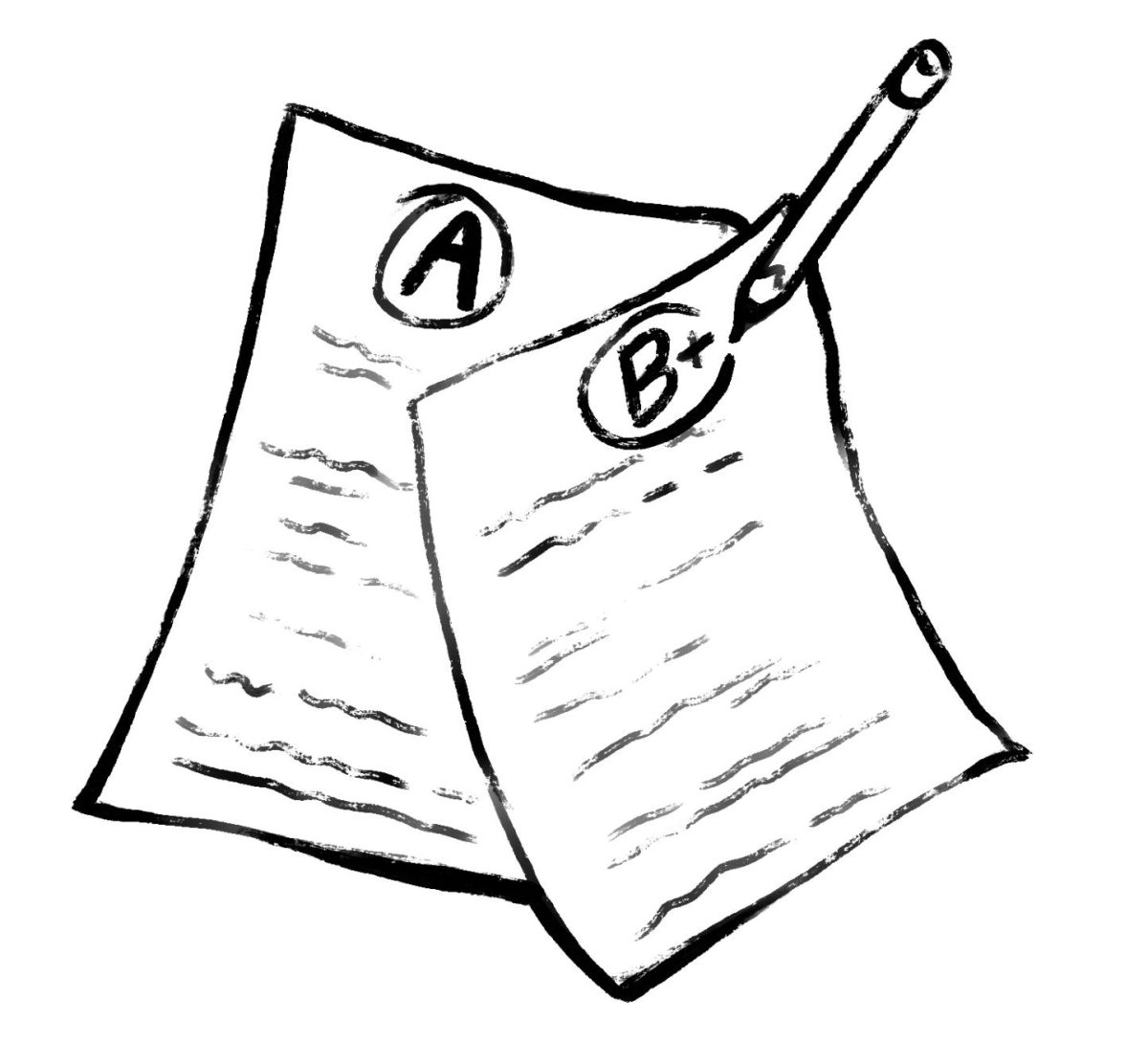
One line in the sand example is when it comes to the grading process. While I see how AI can be useful in creating assignments and projects, perhaps extra busy work, it should never be used in the gradebook. Teachers’ grades are meant to be a direct reflection of how they assess their students’ work, and only the teacher who taught the curriculum and expectations can give appropriate and fair feedback. “Making assignments is one thing with AI, but grading papers with AI, that’s insane. You’re not a teacher anymore, you’re just a medium between the AI and the student. I think it’s completely unjustified,” sophomore Ari Glenn said.
On the other hand, AI eliminates sources of bias that teachers might subconsciously internalize while grading student work. “I think it can be helpful in fighting bias. If you’re grading and then you give it to AI and say, ‘okay, well, grade these papers based on this rubric and maybe compare and contrast and see, you know, do you agree with AI’s assessment?’” Davis said. “Maybe the grade you gave one student was fair, but you didn’t apply that same standard to a different student.”
Fighting bias is always a positive step, but sometimes, as a student, it’s hard to see the bright side of teachers utilizing AI for assessments to prevent bias. “Making assignments is one thing with AI, but grading papers with AI, that’s insane. You’re not a teacher anymore, you’re just a medium between the AI and the student. I think it’s completely unjustified,” sophomore Ari Glenn said.
Other issues arise when AI-based errors come up in teacher-assigned exams. “I’ve had bad surprises with mistakes and errors, so if you want to generate a test, you really have to tell ChatGPT exactly what you expect, and sometimes […] modify it until you get what you want,” Chung said.
If Menlo students are expected to use AI ethically and transparently, we should be seeing the same practices from our teachers. As artificial advancements continue to grow into new possibilities, respect should remain a two-way street in the classroom, with students handing in authentic assignments and receiving genuine feedback in return.