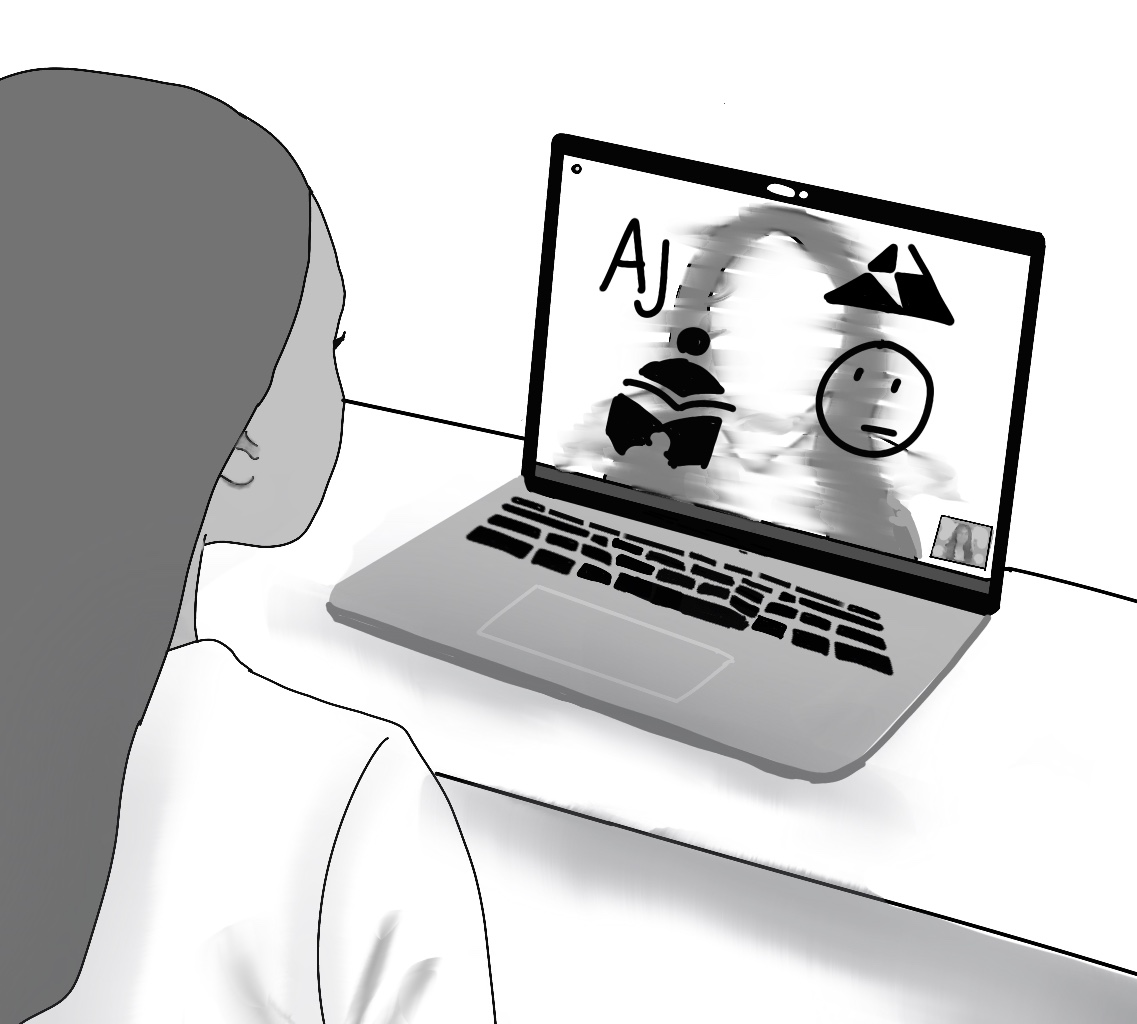


According to a National Institute of Health (NIH) report, 96 percent of counties have an unfulfilled need for a mental health prescriber. Struggles with access to proper mental health care have led many people to turn to mental health apps as an alternative. In 2020, the NIH reported that over 90,000 new mental health apps entered the marketplace, with many more being developed today. However, it remains to be seen whether many of these apps are effective
and reliable.
Senior Claire Yao, who co-leads the Mental Health at Menlo club, thinks apps — like Clearspace and other mindfulness apps — might be one of many solutions to mental health issues. “I do think it’s a good idea to promote more of these apps because they are effective. And some people are actually more inclined to use these apps because [they are] anonymous [while using the app], so anybody that’s hesitant about speaking up can easily access support,” Yao said.
However, Yao also makes it clear that mental health apps do have limitations. “[Mental health apps] do make mental health support a lot more accessible, but I also don’t think that they replace in-person therapy. […] I think the in-person connection cannot be replaced by technology,” she said. Yao also has reservations about mental health apps being used for more serious treatments or conditions.
Junior Sam Dickey is the social media manager for Menlo’s club chapter of the Project Reboot organization, which focuses on the relationship between tech habits and mental health. Dickey believes that social media is a major concern for the younger generation’s mental health. “I think screen time usage, specifically social media usage, is the biggest driver in poor mental health in our age group. Our generation has some of the highest rates of depression [and the] highest rates of mental health illnesses that we’ve seen in history,” Dickey said.
Dickey explains that screentime and mindfulness apps, like Clearspace, can help create healthier relationships with devices. “[Clearspace] helps you use your phone with intentionality, it helps you use your devices in a way that is productive and is not detrimental to your work,” Dickey said.
Concerns about company behaviour around mental health apps also remain a point of concern for users. “I think there are privacy and data security concerns,” Yao said, referring to data privacy in terms of how people use the internet, and what companies get to keep and sell.
The Coat of Arms reviewed the privacy policies of some of the most popular mental health apps and found some ways that mental health apps may be collecting unwanted data. Apps like HeadSpace, a mental wellness and therapy app, often collect HIPAA (Health Insurance Portability and Accountability Act) protected information about users, which they cannot share. That said, these platforms can sell the data that tracks the interests or buying tendencies of users to advertisers or business partners. The privacy policies of HeadSpace and BetterHelp, mental health and therapy apps, state that they have the ability to collect data about messages sent between therapists and patients, as well as usage of the app, though they often stipulate that the content of these messages is not collected. It should be noted that privacy policies vary between apps.
Yao thinks that, despite some issues, mental health apps can provide an opportunity to widen access to resources for lots of people. “I think it’s very easy to get into [mental health apps]. […] I mean there are so many ways to approach mental health apps,” Yao said.