

Seniors Julia Livingston and Claire Yao chose to research a culturally significant, yet sensitive, topic for their HAND Grant project: the 2019-20 Hong Kong protests. Specifically, they hoped to create a psychological documentary on the interpersonal aftereffects of the 2019-20 protests. These protests took place in response to propositions by Hong Kong authorities to amend the Fugitive Offenders Ordinance, which would allow criminal suspects to be extradited to mainland China, where due process rights are routinely violated. Protestors feared that the amended bill would threaten Hong Kong’s autonomy, and the movement grew into a wider campaign for pro-democracy reforms. (Human Rights Watch).
The protests were largely split between two groups, who each sought different outcomes for Hong Kong. “There were a lot of protests between people [who] believed in pro-democracy versus pro-Chinese government. […] For a lot of Hong Kong’s history, they never really had true autonomy, because they were always covered by another government,” Yao said.
“The Sino-British Joint Declaration (1984) essentially stated that for 50 years, [starting in 1997], Hong Kong would live under [a] ‘one country, two systems,’ framework. This meant that they were considered a Special Administrative Region under the direct authority of China, but would have sovereignty.”
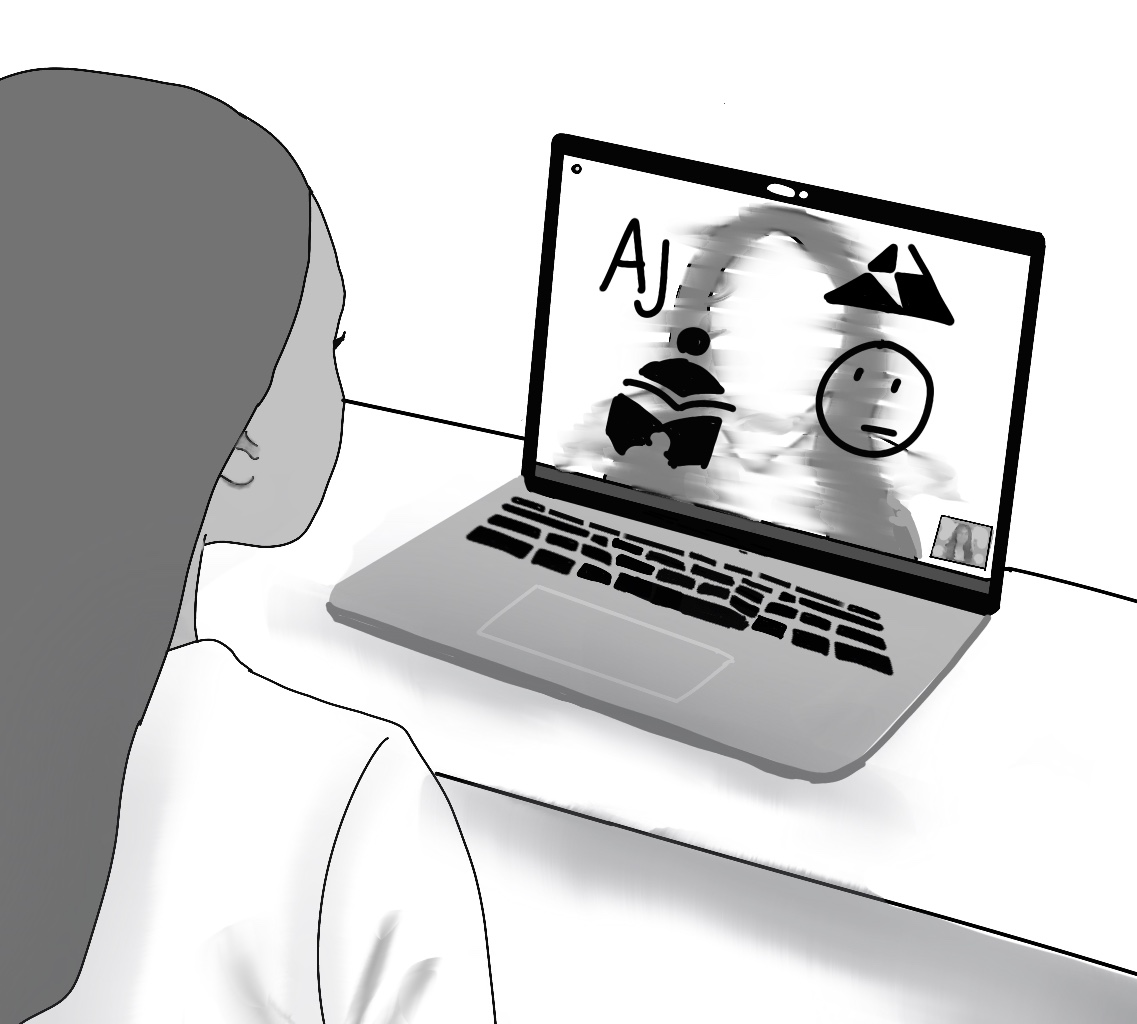
A few months prior to their trip, Livingston and Yao reached out to prospective interviewees to gain multiple perspectives on the protests. “We started reaching out and telling [people] about our project and asking to interview. […] There were also groups of people who moved out of Hong Kong after the protests, so we were doing some anonymous interviews with them,” Livingston said.
Additionally, cold outreach via email served to set up interviews with a New York Times professor and non-binary activist Holok, which Livingston and Yao felt were the most interesting conversations.
“Holok sometimes chooses to represent themselves as an Alien to kind of show how they often felt isolated and not accepted living in Hong Kong. They would put on make-up and wear a silver costume to unapologetically express their identity,” Livingston said.
Livingston and Yao felt that the most comprehensive and impactful way to showcase their findings was through a documentary. Livingston also had experience in film, so she handled videography, while Yao conducted the interviews.
“In total, we got footage from six in-person interviews and additional audio recordings. During the span of the trip, I was constantly taking B-roll footage of the people and landscape of Hong Kong, which could be used to visually represent the stories,” Livingston said.
When Livingston and Yao returned from their trip, they began putting the documentary together. “In July, we created a text-edit version of our storyline, which included writing the narration. I reached out to Jeremy Cho, a graphic motion designer, to create the animations. Then from August to January, I began putting the clips and B-roll together, so we completed it in February,” Livingston said.
Livingston and Yao are now focused on bringing their documentary to the broader community. They are set to show the documentary during Creative Arts week, and they hope to disseminate a message of togetherness.
“The whole goal of our documentary is to promote unity and to show that everyone comes from different places and backgrounds. We have to understand that everyone has different perspectives and viewpoints and the way to promote unity and less polarization is to just listen to each other and be respectful of each other,” Yao said.