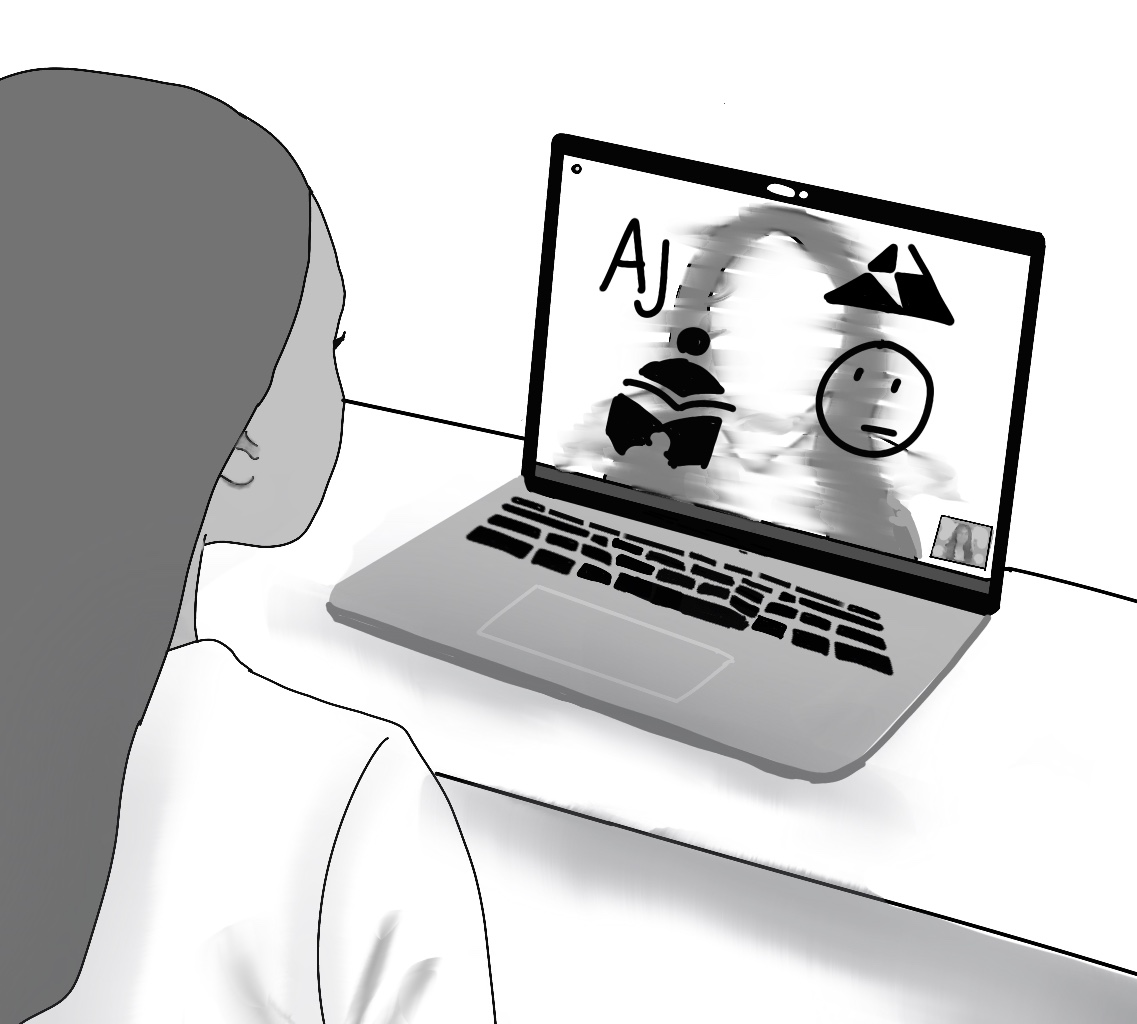


As Menlo students pack their schedules with difficult classes and stretch their nights thin with long hours of extracurriculars, the heavy workload can take a toll on both mental and physical health. While some students benefit from attending school consistently, others take personal days off for the sake of their well-being: waking up late, eating breakfast in bed, watching a favorite show. However, is postponing an entire day’s worth of classes and time to meet with teachers worth the temporary relief, or does the looming guilt of new assignments swallow students whole either way?
For Upper School Wellness Counselor Stefie Dominguez, the answer to whether personal days are acceptable or not isn’t straightforward. “Menlo is a very high-achieving school. A student who takes a day off for something other than physical sickness might fear that they may be perceived as weak,” she said.
As one of the three counselors at Menlo, Dominguez believes that the school offers a sufficient amount of support, from the STEM Lab to the Learning Center to the weekly tutorials, though students may not always be inclined to utilize that support. “There’s still a stigma and this attitude of bearing through [mental exhaustion]. I think that there are times where things are hard and you should push yourself, but then there are also days that you should know, ‘hey, I need a day off,’” Dominguez said.
Yet, beyond social stigma and peer pressure, sophomore Mason Campion thinks personal days replace crucial time at school: making up for a missed day is not only inconvenient but also stressful. “The time that I lose by taking a day off doesn’t pay off. The rest that I get does not account for the extra work that I will have when I’m done,” he said.
Sophomore Katelynne Kwok agrees with Campion and emphasized the importance of attending class every day. “I feel that if I skip a day, then I’m going to fall behind. By then, what’s the point?” she said. Rather than providing a fresh start to a tiring semester, personal days limit the already minimal time that Kwok has before deadlines.
The idea of a day solely dedicated to mental health raises another question: how will teachers and parents react? While some parents still strictly stick to their ideals of not missing any school, others are more open to allowing their kids days off. Mathematics Department Chair Danielle Jensen personally encourages students to advocate for their own well-being. “This school is very humane in terms of the days we have off. […] Teachers are very understanding when you [communicate] your feelings,” she said.
However, instead of taking a personal day to sleep, Jensen suggests preventing work from piling up by finding the root of the stress. She believes that overanalyzing mental health only exacerbates the problem and encourages students to take advantage of the learning opportunities rather than hide from the obstacles. “Is it mental health, or is it just life? As a teacher and a parent, one of my jobs is not to eliminate stress but teach you how to manage it. There are stressors in everyday life,” she said.
Jensen thinks Menlo provides an ample amount of support for those who need it and even for those who simply want to pause and reflect. “Do I think stress is negative? I don’t. As with anything, it’s a part of life. The more we focus on the negative side, the more it becomes a negative thing,” she said. “[Students] feel like they are living in the most stressful time ever, and I don’t agree with that. However, I do think teenagers right now put unhealthy expectations on themselves. As I tell my own children, I believe individuals can do anything and everything, but not all at once.”