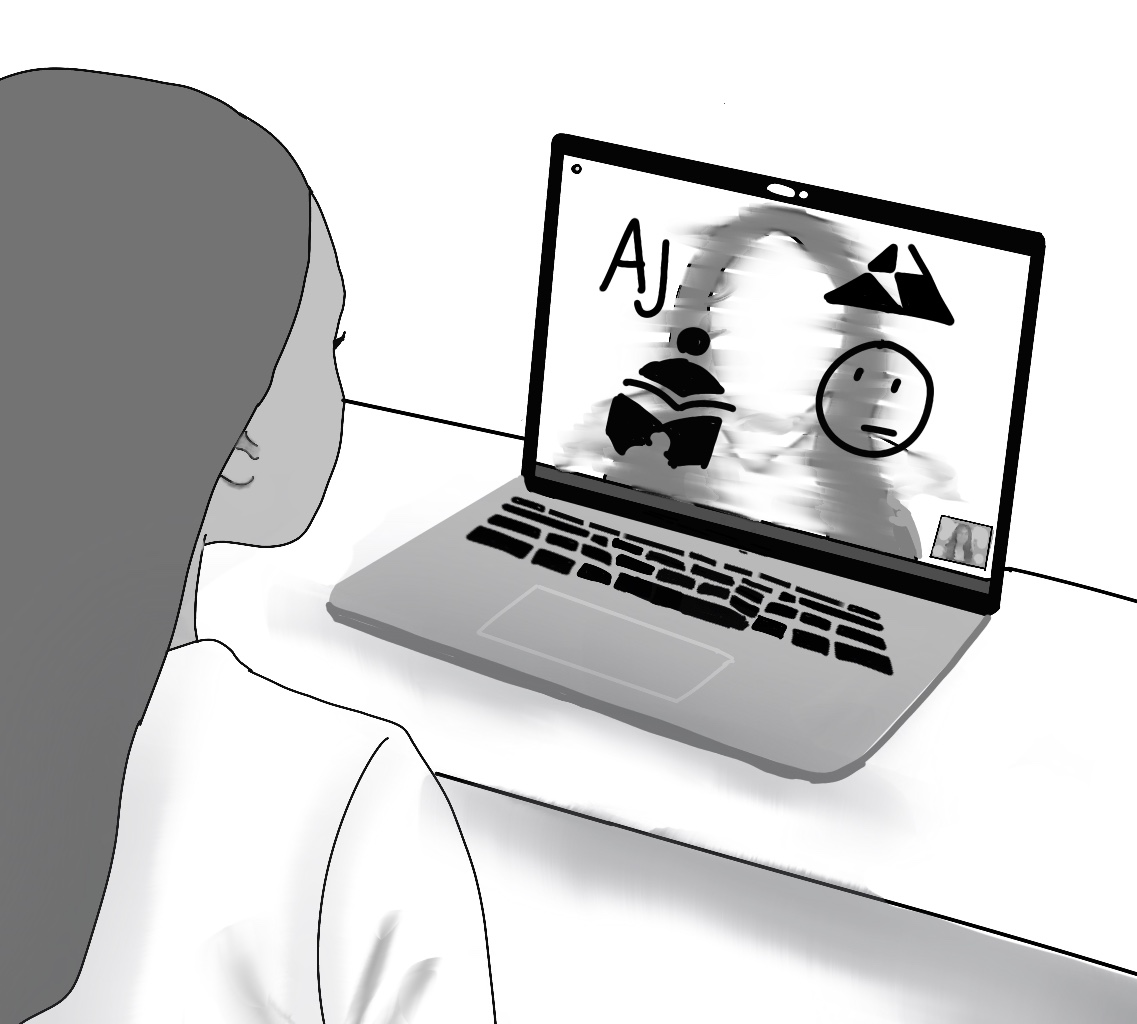


Between academic disappointments, athletic upsets, high expectations and testy relationships, a Menlo student’s mental health can be impacted by a variety of factors on a daily basis. One of those can be sleep. The Centers for Disease Control and Prevention (CDC) advises teenagers to sleep at least eight hours a night, but 2021 data from the agency shows that 77 percent of high school students don’t meet that mark.
Psychology teacher Dylan Cummins knows how detrimental a lack of sleep can be. “Sleep is correlated […] to anxiety. [It’s correlated] with overall life contentment. It’s connected with the capacity to learn. It’s connected with the capacity to perform academically and athletically,” Cummins said.
Cummins said getting a few hours of sleep can be viewed in a positive light by Menlo students. “Sometimes, [little sleep] is increasingly seen as a kind of a badge of honor. ‘Oh, I only slept four hours last night,’ like it’s a good thing,” Cummins said.
Upper School Wellness Counselor Jake Fauver agrees that students can find pride in operating efficiently on very little sleep. That said, in spite of what some students might believe, the costs of sleeping less than eight hours per night can lead to more than just tiredness. “If you pull an all-nighter, […] [you have] the same reaction time and creativity as somebody who’s legally drunk, [having had two or three drinks within an hour],” he said.
Fauver said it’s Menlo’s academic rigor, students’ busy after school schedules and their desire to have downtime that can cut into sleep. “Downtime expands to […] often sacrificing sleep to catch up with friends, text, be online or watch videos after they’ve already put in a full day [of work],” Fauver said.
Assistant Athletic Trainer Stephanie Green said that when athletes don’t get enough sleep there are major effects on their performance. “We see […] a direct correlation between how many hours [of sleep] someone [gets] versus their performance and reaction time,” Green said. If an athlete’s reaction time is lowered, they can leave themselves prone to avoidable injuries. “You have to have good reaction time. […] Lacking peak performance [caused by low sleep] definitely could lead to injury,” Green said.
The academic implications of substandard sleep can be similarly derailing, according to Upper School Wellness Counselor Jessica Azer. “Your memory retention [in class] is lower. Your reactivity is lower. You’re overall more irritable,” she said.
Although students might feel inclined to stay up late to finish work, it’s crucial to find a stopping point to preserve your own well-being for the following day. “[Students] really are doing themselves a huge disservice […] by sacrificing their sleep. By just giving themselves more sleep, they’ll be able to work way more effectively the next day and even catch up on whatever they were trying to finish the night before,” Azer said.