

Menlo seniors Ariya Kaushek and Kinsey Nam noticed that cognitive behavioural therapy — considered the gold standard for anxiety and depression treatment by the National Institutes of Health — is rarely adapted for people with developmental disabilities and co-occurring mental health disorders. This prompted them to apply for Menlo’s Social Entrepreneurship in Action (SEIA) grant, which allows students to develop and implement solutions to social, cultural or environmental issues domestically. After receiving the grant, they used their funding to design an eight-week CBT curriculum and develop an online platform called Mindbridge.
Kaushek and Nam both benefited from CBT as children and had first-hand experience with its impact. “After learning about the lack of mental health support for individuals with developmental disabilities and co-occurring mental health disorders, [we] knew that CBT would be the perfect thing to look into to adapt for our curriculum,” Nam said.
The two worked with the non-profit AbilityPath — which supports individuals with developmental disabilities to achieve greater independence and inclusion — to implement their curriculum. They taught a classroom of ten transitional-aged youth (ages 18 – 24) with developmental disabilities and co-occurring mental health disorders. Though developing a curriculum and teaching it effectively were significant challenges, it proved rewarding over time.
“I think working with transitional-aged youth with developmental disabilities alone was in and of itself a challenge, and adding [multiple] mental health illnesses made communication [with students] a bit difficult at times,” Kaushek said. “As sessions went on, we got to really know and make personal relationships with each of the [students], and I think that definitely helped.”
Kaushek and Nam were able to modify their curriculum and release a high-quality version of the product on Mindbridge, as they received feedback from the class they taught. “It definitely wasn’t an instantaneous thing, but as we were in the classroom, actually [working] hands on with participants […] we really were able to refine it and kind of make it that perfect curriculum,” Nam said.
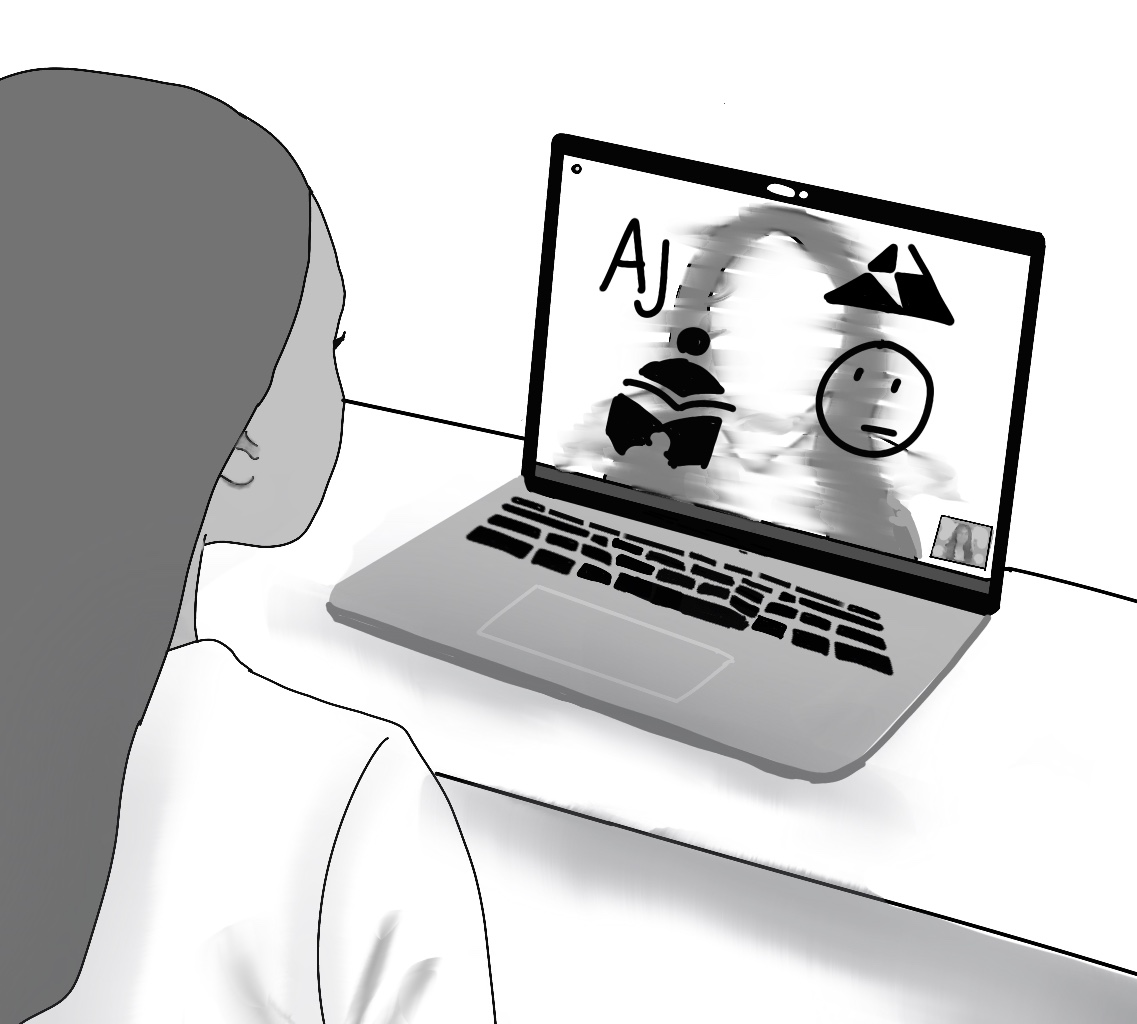
Their website now features three portals — the Educator Portal, the Adolescent & Parent Portal and the Transitional Aged Youth Portal — that each have free downloadable CBT materials. The CBT curriculum is featured on the Educator Portal, while the Adolescent & Parent and the Transitional Aged Youth Portals offer worksheets, readings and videos for people to access. Kaushek and Nam also developed art-based activities known as “MindArt” to go with each lesson that were designed to deepen emotional reflection.
“Every week has a corresponding slideshow worksheet, and then also something we created called ‘MindArt,’ which is essentially an art CBT-based activity. We thought that it was really important to have that hands-on component of learning,” Kaushek said.
Kaushek and Nam have partnered with a number of other non-profits to incorporate their curriculum, and are looking for more ways to widen access to their CBT resources. “We’re partnering with Helpers SF […] and we just got off the call with Stanbridge Academy, which is another disability focused school. […] We also [spoke] at the SFASA-Stanford Adult Autism/DD Conference early in November to really spread our impact,” Nam said.
Their main advice to anyone who wants to make a change in their community is to step up and not let age stand in the way. “I think it’s important to understand that just because we’re high school students, it doesn’t mean that we can’t make the same impact as some of these bigger nonprofits,” Kaushek said.