
A boulder hurtles down a narrow tunnel. Water ripples across a park lagoon. A purple sunset paints a city skyline. Everyone knows an iconic movie scene or two: Indiana Jones, Jurassic Park, La La Land — the list goes on. While actors may serve as the faces of these Hollywood blockbusters, box office success depends largely on the directors, producers, editors and cinematographers. From set design to casting to screenwriting, filmmakers behind the camera bring our favorite stories to life.
Junior Lana Khan began experimenting with editing at 13 years old, eventually gaining over 5000 subscribers on YouTube for her daily vlogs and outfit inspiration videos. Although her mother asked her to delete the account, Khan later rediscovered her love for film after taking Menlo’s Fundamentals of Media Production elective as a freshman.
By the time she signed up for Advanced Media Production during her sophomore year, Khan had already developed multiple short films and commercials. “I wrote, directed, edited and starred in my projects, which is very hard to do when you’re trying to manage a camera,” she said.
Growing up in Silicon Valley’s STEM-focused environment has shaped Khan’s belief that film offers a creative outlet crucial for self-expression. She often draws inspiration from her favorite movies, Pride and Prejudice (2005) and Cruella. Their directors, Joe Wright and Craig Gillespie, sparked her appreciation for cinematography early on.
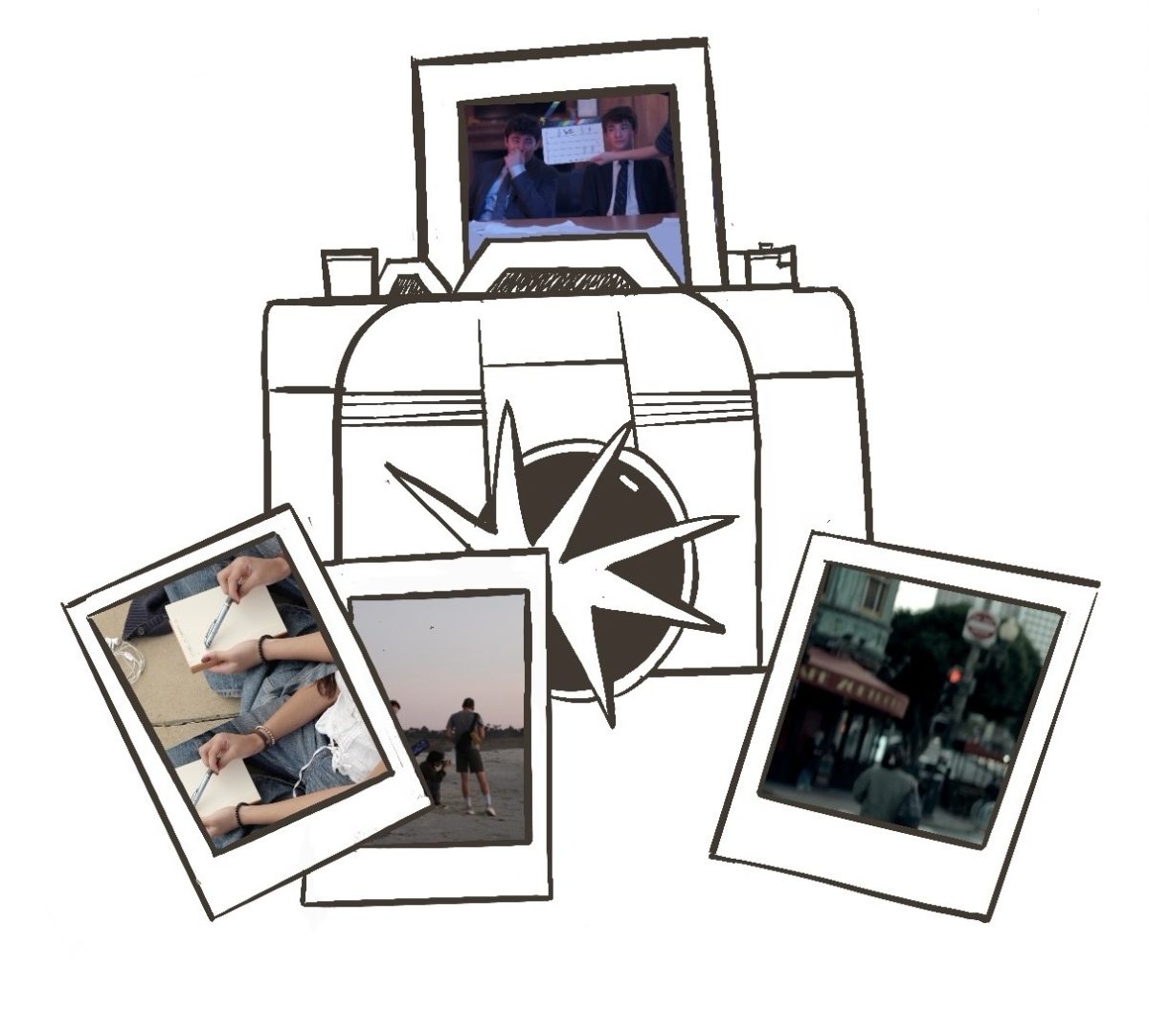
When her father bought her a Sony camera last spring, Khan recalled “forcing” a friend along on a trip to San Francisco, where they shot clips in front of cafes owned by famous American filmmaker Francis Ford Coppola.
“I find it so cool how you can look through a camera, and it looks almost like a movie already before any editing,” she said. “That’s the most satisfying part for me; it just comes together, and that’s the best feeling.”
However, Khan feels pressured by the high-stakes of the film industry to conform to a safer career path. According to a comprehensive study by Backstage, a major networking platform for directors and actors, only about 2% of filmmakers are able to make a living from film alone.
“It’s definitely something I want to keep doing, but I don’t know. It’s scary to think about going for it,” Khan said. To balance both a steady job and passion for cinematography in college, she plans to major in business and minor in film.
On the other hand, junior Kai Ruwitch, who works alongside Khan as a teacher’s assistant for Menlo’s media production classes, has no intention of pursuing film as a career due to its nepotistic bias. “It’s always the money. Movies are expensive, and I don’t have any famous movie maker relatives that would give me an advantage,” he said. Like Khan, his favorite aspect of filmmaking is also cinematography, especially the shotgun position.
Ruwitch first became intrigued by film five years ago while watching Interstellar, a science-fiction movie about astronaut morality. The summer before his junior year, he attended a three-week program at the School of Creative and Performing Arts in Los Angeles (SOCAPA LA) to study editing and production.
After immersing himself in cinematography, Ruwitch hopes that other students can garner the same respect for film. He urges people to see movies in person rather than relying on streaming services like Netflix. “Streaming is the TikTok of movies. […] It’s like eating takeout,” he said.
For the best experience, Ruwitch recommends spending an extra $15 on a cinema ticket for upcoming movies like Project Hail Mary and The Odyssey — but avoid 3D movies, which he says are a marketing gimmick. “The whole point of the cameraman filming it in such a way is so that you watch it on the big screen,” he said. “Any chance you get, go to the theater. See movies how they’re meant to be seen.”